
Enforced Barriers Project
The Enforced Barriers Project identifies the structural barriers embedded within disability policy so they can be dismantled. By showing how restriction is built into the design of these systems, the project shifts the focus away from who qualifies for support towards why these structures exist in the first place. Naming the structure is the first step toward changing it.
The Four Enforced Barriers
-
Because services are tied to geographic lines, moving can mean losing healthcare, personal care, or essential supports. People stay where they are because moving is unsafe. This turns geography into a form of containment because a person is “free” only as long as they remain where they are currently covered.
-
Support is often tied to poverty, marital status, or means-testing, which forces people with disabilities to remain financially limited in order to keep the care they rely on. Independence is treated as a risk, not a goal. Instead of rewarding stability and growth, the system penalizes it making long-term planning, financial security, and family formation harder or impossible.
-
Benefits, eligibility, and services can be reduced or removed at any time, forcing people to live in constant fear that stability could disappear without warning. This creates a survival mindset instead of a growth mindset. The message becomes clear that independence is conditional and always at risk.
-
Decisions about disability policy are often made without people with disabilities in leadership roles, which means the lived reality of the system is left out of the solutions. When disabled voices are excluded from planning, design, and oversight, barriers are treated as individual struggles rather than structural failures.
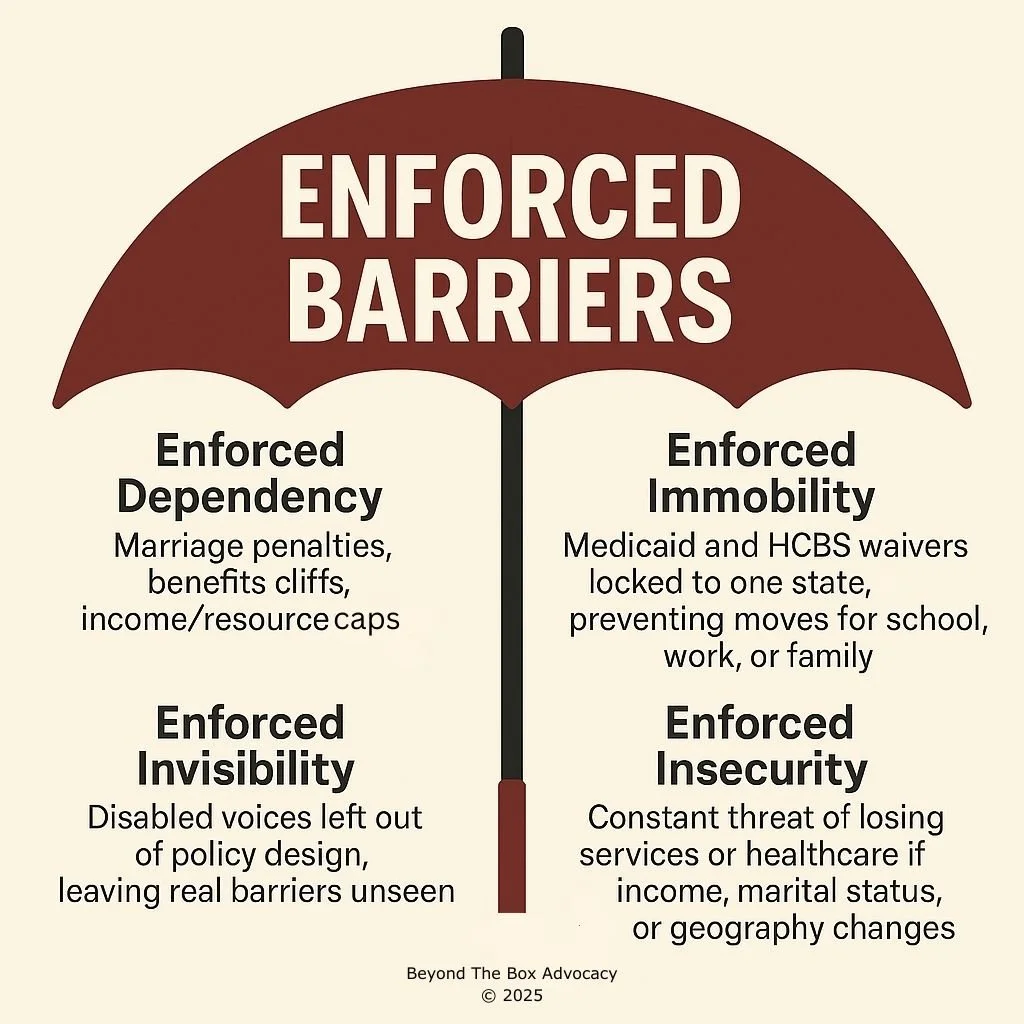
Image Description:
A red umbrella labeled Enforced Barriers covers four systemic issues affecting Americans with disabilities: dependency from benefit cliffs, immobility from geography-based services, invisibility in policy design, and insecurity from the risk of losing supports.